As I share a glimpse into the interior design process of my personal bathroom project, you will learn how I look at pattern, color, and ultimately the pieces that create the whole.
The intent of sharing the behind the scenes so to speak of my personal bathroom remodel is to show you how intricate the design process is, and how deeply passionate we are about the details.
In this post I discuss how to select materials, thoughts on mixing metals, creating a color palette, and developing a cohesive design. Learn all of my designer secrets for creating a layered design with soul.
In case you missed it: be sure to check out the inspiration for my personal bathroom remodel, it involves sink skirts and marble!
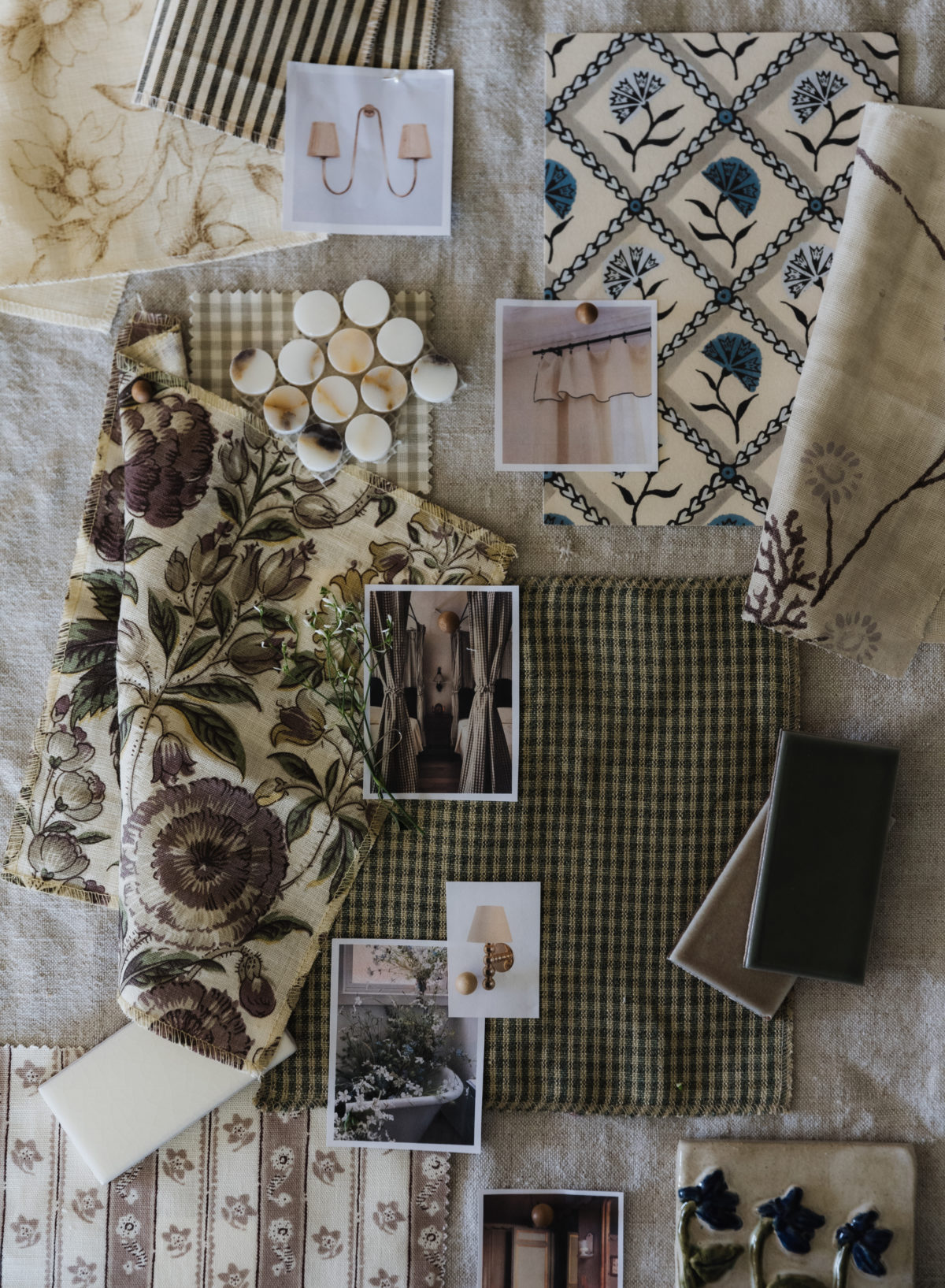
The Design Process: Phase Two
Whenever we begin a project at Boxwood Avenue Interiors, we start with inspiration. Not necessarily photos (although often, that is included) but primarily the feeling we want the space to provide for our clients. It is a collaborative process between us and the clients to develop the overall design direction for the home.
Once we are aligned, we transition into material selection. Material selection comes prior to furnishings and soft goods (textiles) because the materials serve as the foundation of the space.
Our Design Philosophy
A brief ramble of my thoughts on design, and creating a consistent design…
I recently learned about holism in psychology. I find it absolutely fascinating as someone very interested in learning more about myself and our interactions with one another. I find that this theory not only applies to human nature, but also to interior design very definitively.
Holism: The theory that parts of a whole are in intimate interconnection, such that they cannot exist independently of the whole, or cannot be understood without reference to the whole, which is thus regarded as greater than the sum of its parts.
Reading this from the pov an interior designer feels as if the lightbulb has just gone off. Finally, what I feel so deeply inside as a creative, is defined!
This all to say, materials create the whole. Each element is important and dependent on one another. When one selection changes, it is a domino effect of other changes that must reflect the new material.
We explain this in depth to our clients as we work through the design process. Often, a client may not be smitten with a particular color or rug and request a change. But it’s important to think of the bigger picture, looking at the entirety of the design.
If you’re following my wholistic approach to design mentioned above, then you’ll realize that the change of a single element cascades throughout the entire project.
This is why we begin working with our clients collaboratively from day one. Beginning our process with a design direction presentation. Setting the scene for the project, together. Prior to even thinking about materials.
Planning a remodel, new build, or design project?
We’d love to learn more about how we can help yo bring your project to life through our interior design services!
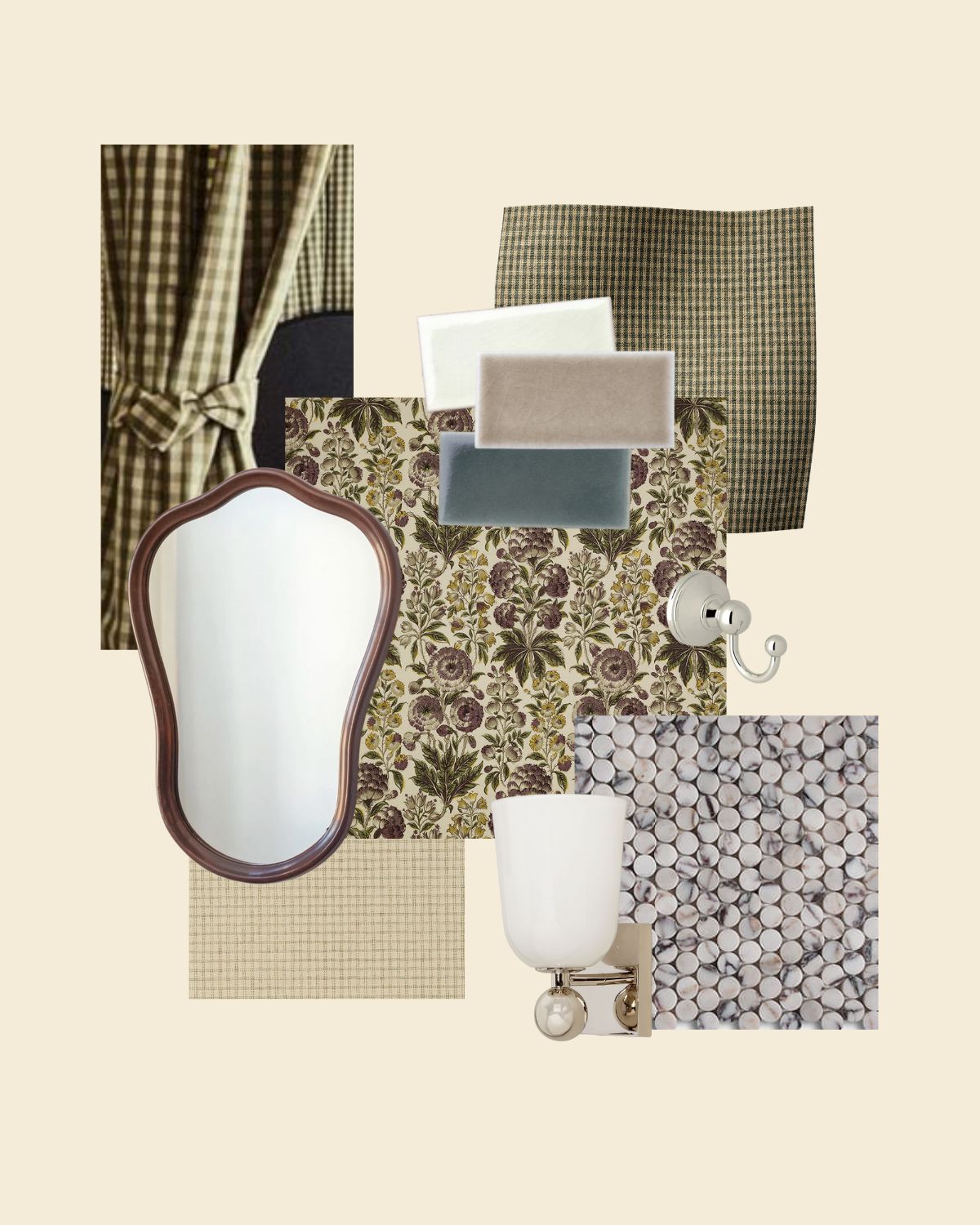
How to begin selecting materials for a interior design project?
The Feeling
I believe that much of the things we wish for are not so much the “thing” but the feeling the thing provides us.
This serves true in design as well. Making a beautiful space is easy, the challenge comes in creating a space that feels exactly as our clients dream it to.
When thinking about materials – we alway start with the question: How do we (us & the client) want the space to feel?
Jumping Off Point
Once an overall feeling is established, we transition to a jumping off point.
The jumping off point of a project is just that: the inspiration that propels you into the creative process. The diving board of the design project.
Many times this is an overall aesthetic, color, “vibe”, specific fabric, or piece of artwork.
Sometimes it can be a special piece of furniture or even light fixture.
This is the piece that begins the intricate web of material selection.
Should you mix metals in a bathroom?
Mixing metals
Mixing metals in a bathroom is always beautiful. Doing so creates depth and interest in a space. As a designer, I highly suggest this approach to material selection.
Pretty Mixed Metal Combinations:
Unlacquered Brass + Bronze
Unlacquered Brass + Polished Nickel
Aged Brass + Bronze
Aged Nickel + Bronze
Metal finishes to avoid: matte or brushed finishes (in any material) such as matte black, champagne bronze, gold, faux brass (polished vs. unlacquered).
What are the best metal finishes for bathroom faucets?
Unlacquered brass faucets will forever be one of my favorite finishes to use in a bathroom design. I also happen to love polished nickel as well as oil rubbed bronze.
You’ll notice that all of these finishes feature warm undertones, my personal preference.
Best plumbing finishes for a bathroom:
- Polished Nickel
- Unlacquered Brass
- Aged Brass
- Aged Nickel
- Oil Rubbed Bronze
Design Tip: Make sure to select the same brand, style, and finish for all plumbing hardware in a bathroom. Ex: A brass faucet should match the brass shower head, etc…

Creating a Color Palette
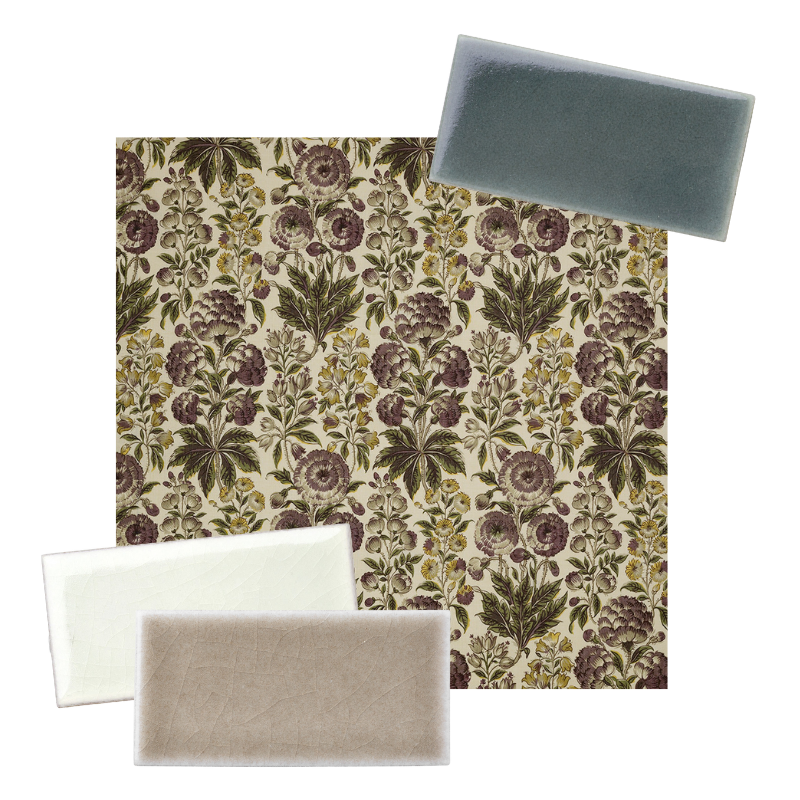
Utilize the jumping off point to begin the creation of a consistent color palette.
As a designer, one of my favorite ways to pull the color ways of a fabric individually. You can see here in my bathroom I’ve pulled the purple and blue undertones of the fabric to select the tile colors.
I love sourcing tile from Fireclay, their colors are exceptional!
Developing the Design
With the design direction narrowed down and a refined color palette in mind, you can develop the design further with intricate details to take things to the next level.
This includes the stitch types, thread color, grout color, tile trim, transitions, etc…
Developing the design is a fine line. I find that it’s much like accessorizing: it looks best when there’s *just enough* and not too much (unless maximalism is intended!).
Designer Tip: Refrain from layering a multitude of trends in a singular space. This will date your home quickly. Instead opt for timeless details that speak softly.
In my next post, I will share how to think through the details including tile layouts, textile fabrication, and more!
Explore all about Paints and Finishes
Be sure to check out our paint-related articles to dive deeper into color trends, techniques, and tips for your next project! Whether you’re looking to refresh your living room or discover the best finishes for your exterior, we’ve got you covered. Stay inspired and get the best advice for all your painting projects!
Designer’s Review: Sherwin Williams Pure White SW7005
The Best Red Paint Color Ideas to Transform Your Space
A Designer’s Guide to the Best Warm White Paint Colors
How to Choose the Best Interior Paint Colors for Your Home
A Green Bathroom Remodel You’ll Love
instant download
Little Black Book of Color
Download our free paint guide! Get our expert guidance for your entire home with our 30 page paint guide.
The exclusive Boxwood Avenue paint guide to achieve a perfectly cohesive palette in your home!

Gooood
Great guide for me. Thanks for sharing it and bad time simulator which is awesome.
That holistic design perspective is so spot on—changing just one tile or finish really does trigger a whole domino effect across the space! You can use ai video upscaler.
I appreciate the focus on choosing materials thoughtfully, it really makes a difference in how a bathroom feels long-term. Would love to see examples of how you balance durability with aesthetics in smaller spaces.
https://toframes.video
Great
https://scarletskips.net
Looking forward to seeing your designer’s take on balancing durability and aesthetics in bathroom materials—tile and stone choices
https://graveyardkeeper2.net
I absolutely loved your guide on selecting bathroom materials! I recently renovated mine, and choosing the right tiles felt like a ragdoll hit moment – so many options! Your tips are super helpful for avoiding that overwhelming feeling. Thank you!
Seeing the behind-the-scenes of your own bathroom remodel makes the process much easier to follow than a finished reveal. The section on mixing metals and building a color palette before choosing the individual pieces is the part most people skip, and it shows in how cohesive the result looks.
(From the team at PixArmory, an AI photo editor.)
Really appreciate the designer’s perspective here—it’s helpful to think about durability and moisture resistance alongside aesthetics when choosing bathroom materials.
https://permafrostgame.net
I like that you start from the feeling the space should give rather than from photos, and the notes on mixing metals and building a cohesive color palette are really helpful for anyone planning a remodel. Seeing the sink skirt and marble inspiration come together will be fun. When I compare material samples I like to line up photos of them side by side; PhotoMerge.app is a free browser tool we make for exactly that.
Starting from a primary inspiration piece and then building the palette outward explains why the mixed metals still read as one cohesive room instead of a collection of finishes. Seeing the material selection laid out side by side before anything is installed is the most useful part of this behind-the-scenes look. (Shared by Jev AI Tools.)
A thoughtful breakdown—durability and slip resistance matter just as much as appearance when choosing bathroom materials. More guidance on balancing maintenance with the overall design would be especially helpful.
invokyr wiki
A helpful perspective—balancing durability, slip resistance, and maintenance with the overall aesthetic is essential when selecting bathroom materials.
rob run
video meme maker Your point about materials creating the whole really resonates—starting from a feeling rather than a single tile is what separates a cohesive space from a showroom collage. It’s the same instinct behind a good short video: you begin with the joke or the mood you want to land, then let every choice serve it. That’s why tools like Memevy strip away the editing learning curve—upload a photo, pick a template, and get a clean, watermark-free clip in seconds. Worth keeping in mind the next time a finished room (or reel) needs that final layer of personality.
hotel lobby AI rap Starting with the feeling before picking a single tile is the advice more designers should give—most people do it backwards and end up with a moody palette that fights the light. Your point about one material change rippling through the whole room is spot on, the same way a single photo choice shapes an entire short video before anything else gets generated.
image to video 9:16 Starting with the feeling before ever touching materials is the part most people skip, and it’s usually why a bathroom ends up looking pieced together rather than intentional. The idea that one material change cascades through the whole room really holds up—I’ve seen the same principle apply to fan-driven creative projects, where every piece has to sit inside a consistent visual world to feel whole.
sing polenta is genius! The step-by-step dough stretching looks so satisfying to watch. Arranging all those golden-brown beauties on a platter gives me major grid maker vibes.
Unforgettable trend video maker Your point about materials creating the whole really resonates—one change cascades through everything, which is why nailing the foundation first matters so much. It’s the same logic behind tools like Unforgettable Car AI, where a single selfie becomes a complete 15-second 24 UNO car reveal with the trend sound, no filming or editing required. The “feeling first, details after” approach applies whether you’re designing a bathroom or a scroll-stopping short.
Ozil goal AI Your point about materials creating the whole really resonates—especially the idea that changing one element cascades through the entire design. That same domino effect shows up in unexpected places; for instance, Ozil Goal AI takes a single photo and rebuilds an entire goal scene around it, keeping the stadium, keeper and camera while you become the scorer. It’s a fun reminder that one well-placed element can anchor everything else.
no LoRA training The idea that materials create the whole really resonates—especially the point about a single change cascading through an entire project. It’s the same principle behind keeping a character visually consistent across every image and video: one shift in the face and the whole story falls apart. For authors and game developers building a visual world, that continuity is everything.
transparent PNG layers The holistic take on materials really resonates—every tile and finish ripples through the whole scheme, and the same holds true for how you build out a scene in post. When I’m pulling a bathroom moodboard apart to test palettes, I isolate the subject, fixtures, and backdrop into separate editable layers in about a minute instead of hand-masking each one, which keeps that “greater than the sum of its parts” logic intact while you experiment.
Remove Text Your point about materials creating the whole really resonates—especially the idea that changing one element cascades through the entire design. I’ve found that even small text details in project documentation can disrupt that cohesion if they’re not handled cleanly, which is why I lean on simple tools to strip unwanted formatting before sharing specs with clients. It keeps the focus on the design story rather than the clutter.
background replacement Your point about materials creating the whole really resonates, especially the domino effect when one selection changes. It reminds me of how video editing works when you swap a character or background but need the rest of the shot to stay coherent. Tools like Genjutsu AI handle that by keeping motion and timing intact while you restyle footage, which feels like the same holistic thinking applied to moving images.
batch manga translator Your point about materials creating the whole really resonates—the holism comparison is spot on. It reminds me of how small consistency matters in unexpected places, like keeping dialogue intact when translating manga pages; the artwork and text have to feel like one cohesive piece or the whole thing falls apart.
Rumpelstiltskin meme Your point about holism really resonates—materials aren’t independent choices but parts of a whole, and changing one element cascades through the entire design. I’ve noticed the same principle applies beyond interiors: even a 12-second AI video meme works because every detail (the tiptoe dance, the shushing gesture, the soundtrack) interlocks to create a single cohesive feeling. It’s a good reminder that whether you’re selecting bathroom tiles or generating a viral clip, the pieces only work when they serve the whole.
unwanted object remover Your point about materials creating the whole really resonates, especially how one change cascades through an entire bathroom. It’s the same with photos: a single stray object or watermark pulls attention from the whole composition, so cleaning it up before sharing feels like finishing the design. I’ve been using a browser-based AI eraser that lets you brush over unwanted elements and rebuilds the area from the surrounding scene, and it fits that same “every element matters” mindset.
ai text humanizer Your point about materials creating the whole really resonates—it’s the same with writing. A draft can have all the right ideas but still feel off until the language itself is reworked to match the intended tone. I’ve found that tools like AI Humanize Text help smooth out AI-generated drafts into natural, purpose-specific English (ten writing purposes and nine tones to choose from), so the words finally match the feeling you’re after.
Play Jean Phil Your point about materials creating the whole really resonates—it’s the same logic behind why a single photo can carry an entire character. On Play Jean Phil, you upload one image and pick the wig, moustache, and suit colour, and that one choice cascades into eight rebuilt scenes with original sound, delivered as a vertical MP4. It’s a fun reminder that constraints, not endless options, often make the most cohesive result.
AI lip sync Your point about materials creating the whole really resonates—especially how one change creates a domino effect throughout a space. I’ve found the same principle applies when building a consistent character across a visual story: change one detail and everything shifts. Keeping the face locked while swapping outfits, scenes, and even art styles (anime to oil painting) is exactly how I keep that holistic feel intact without retraining anything.